
ESCOLA DE ARQUITETURA, ARTE E DESIGN DA UNIVERSIDADE DO MINHO
EMERGÊNCIAS
EAADUM
Autores / Authors
Afonso Carpi, Ana Bastos, Diogo Pinheiro, Lídia Araújo, Leonor Moreira, Maria José Delgado, Matilde Serrão, Miguel Silva.
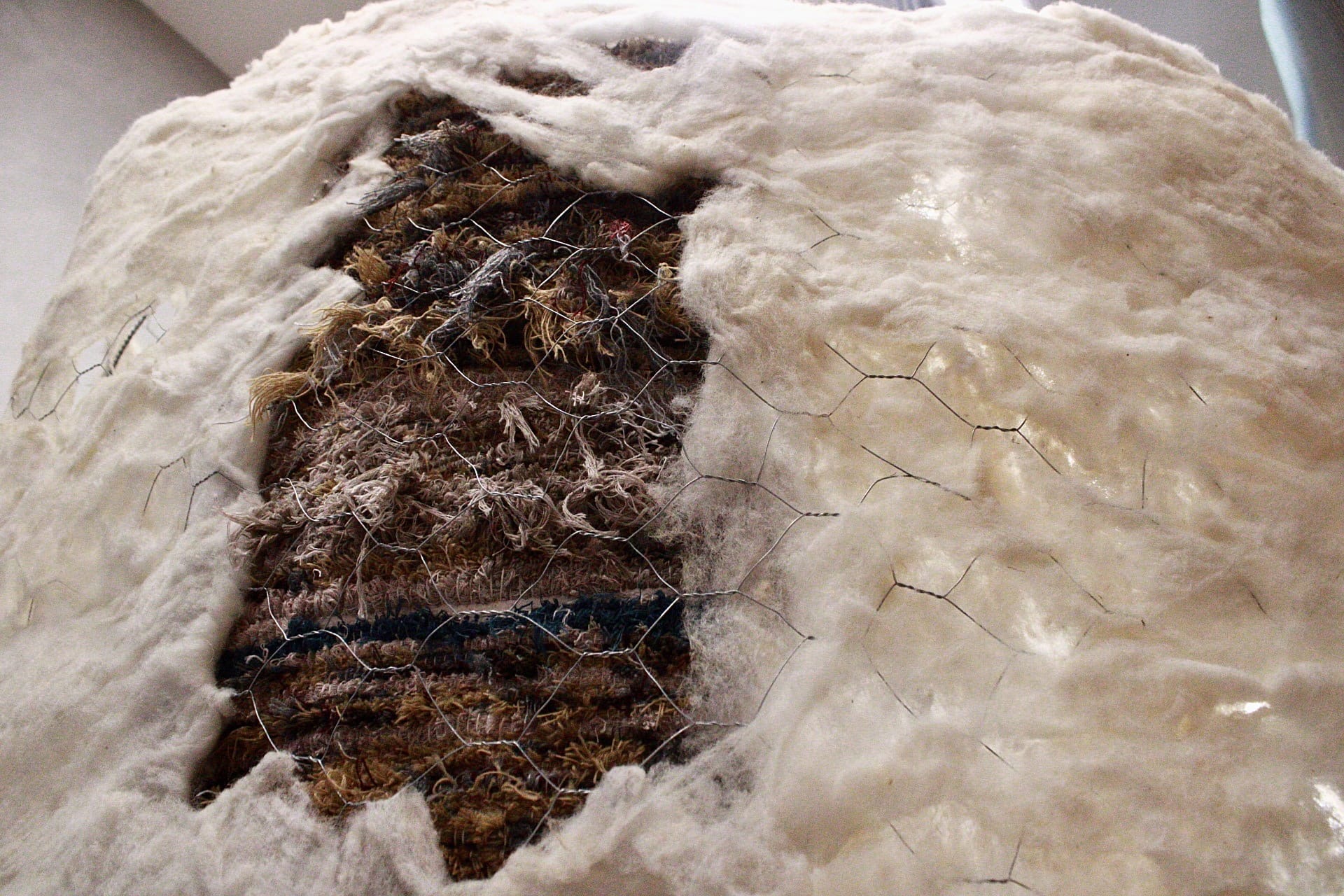
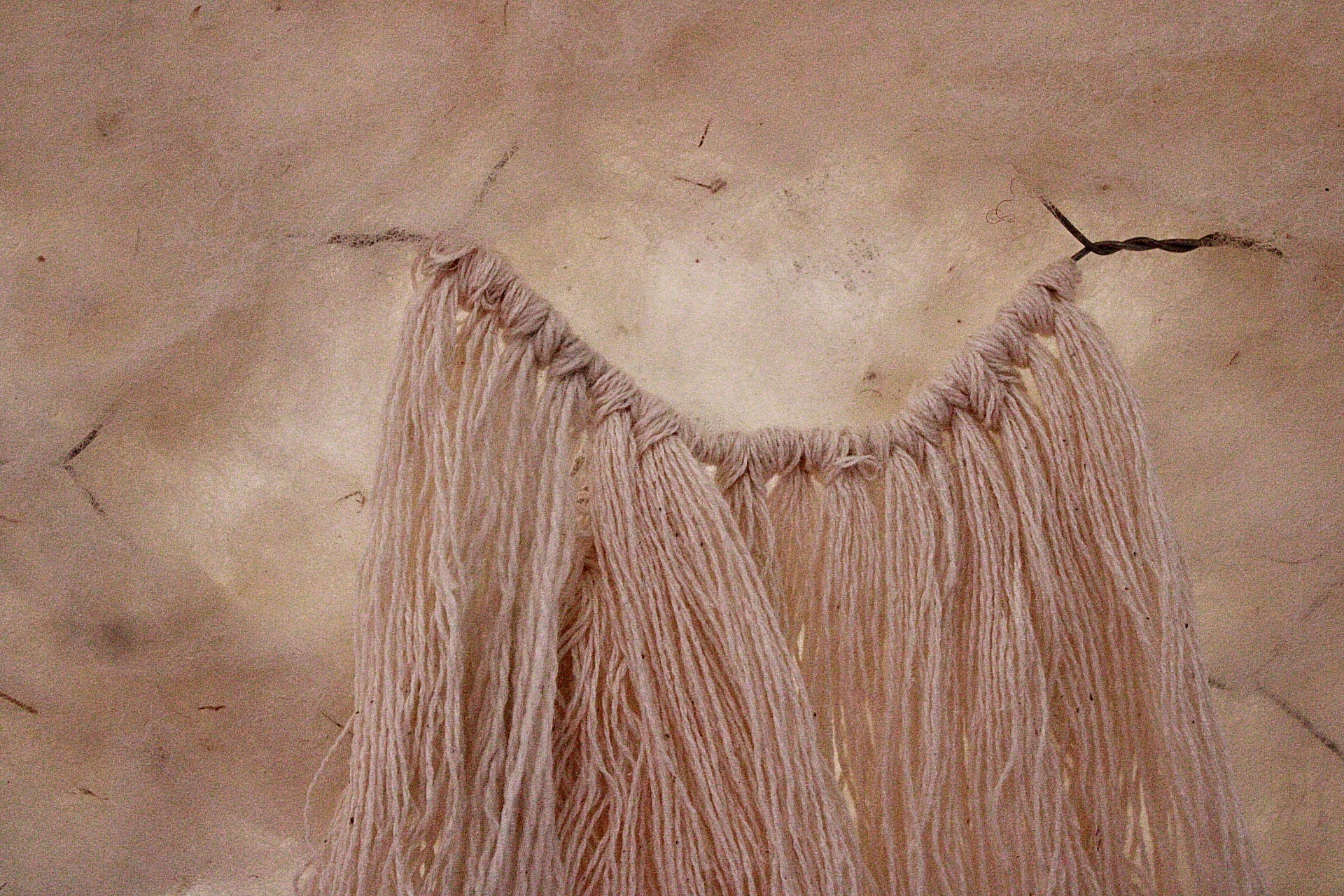
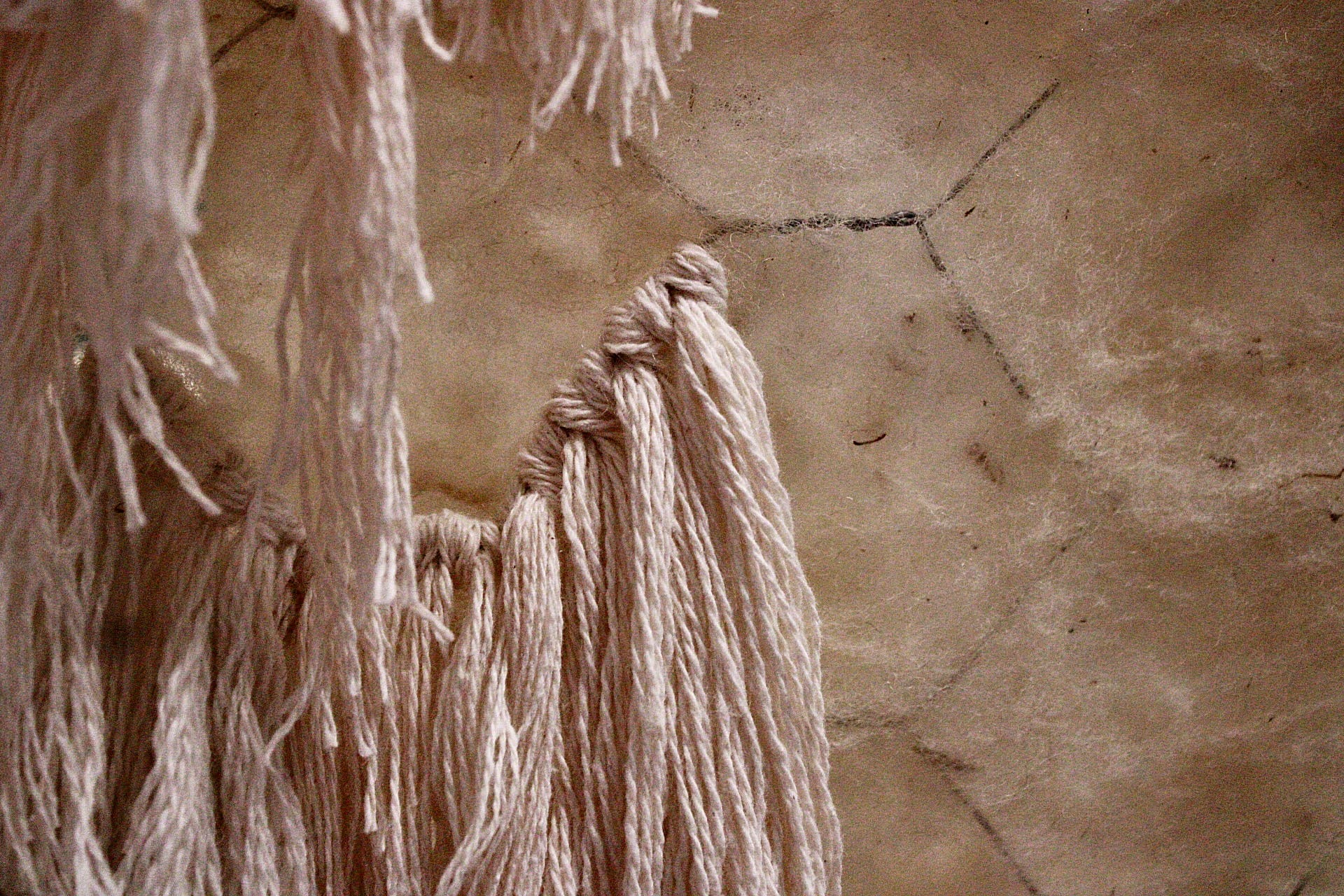
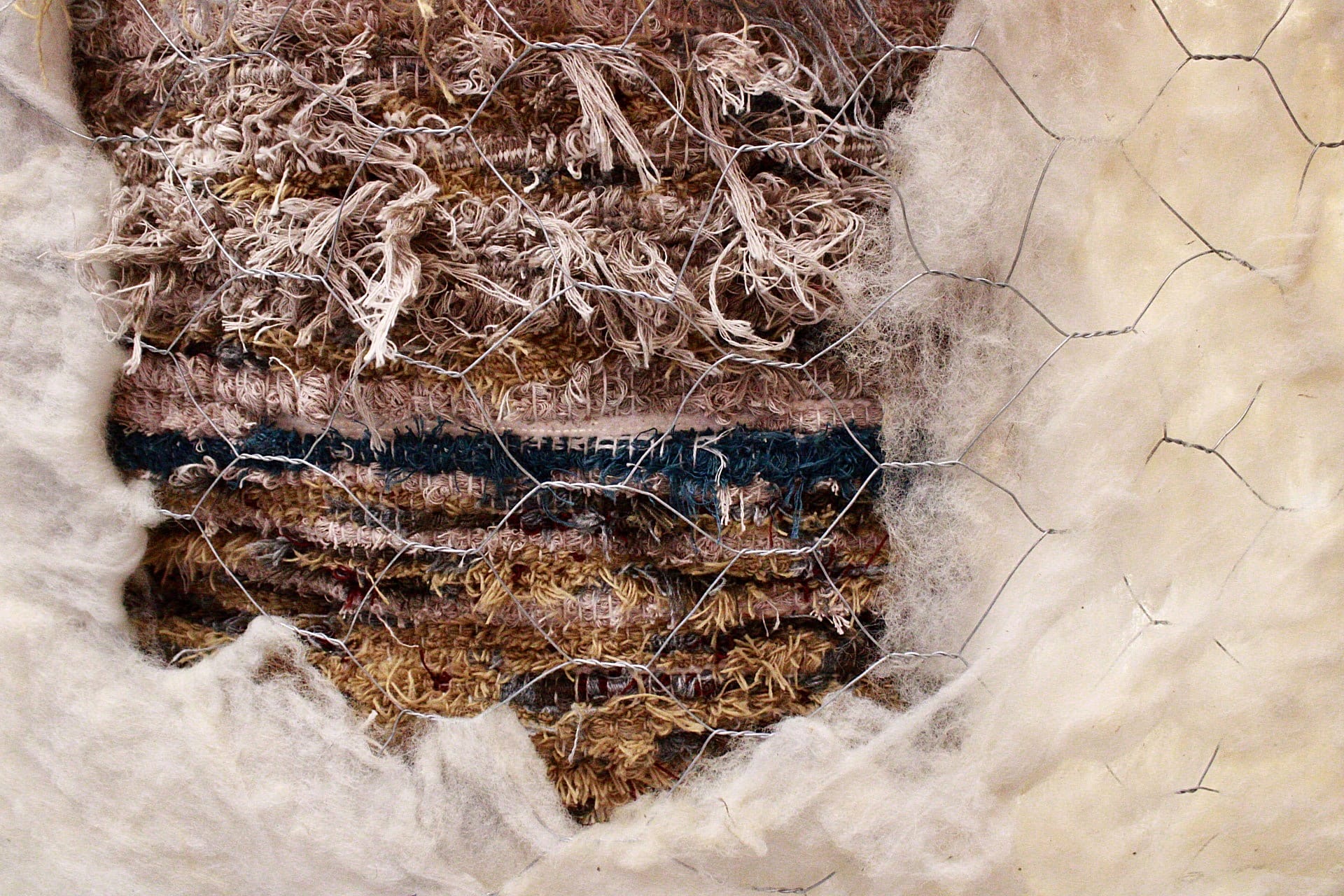
Casulo
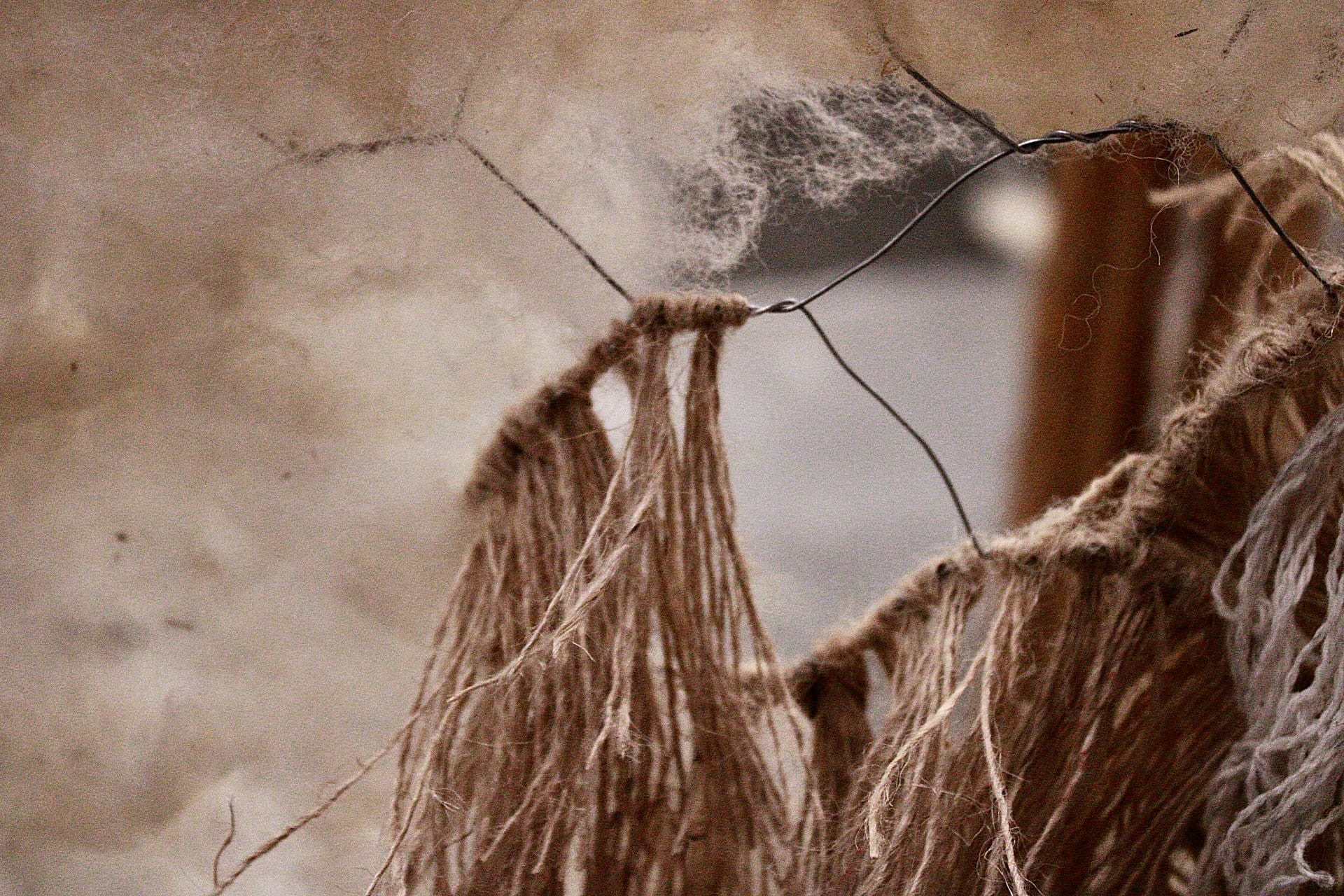
O tema “Por Um Fio” revelou-se particularmente instigador. No fundo, acabámos por nos sentir, literalmente, por um fio e, aos poucos, nessa fragilidade, resolvemos pendurar tudo num só fio.
Ao longo do pensar, do fazer, do conversar, percebemos que o fio não poderia ser estático. Tal como o mundo gira, roda, treme e explode, este “Casulo”, como resolvemos chamá-lo, é dessa natureza: um sistema vivo. Transporta-nos, renova-nos mas está também na iminência de ceder, de ruir.
O casulo não é apenas proteção; é uma membrana que envolve o corpo e o transforma. Tal como os tecidos, as roupas e os acessórios, o casulo cria uma relação entre o interior e o exterior, entre aquilo que somos e aquilo em que nos estamos a tornar.
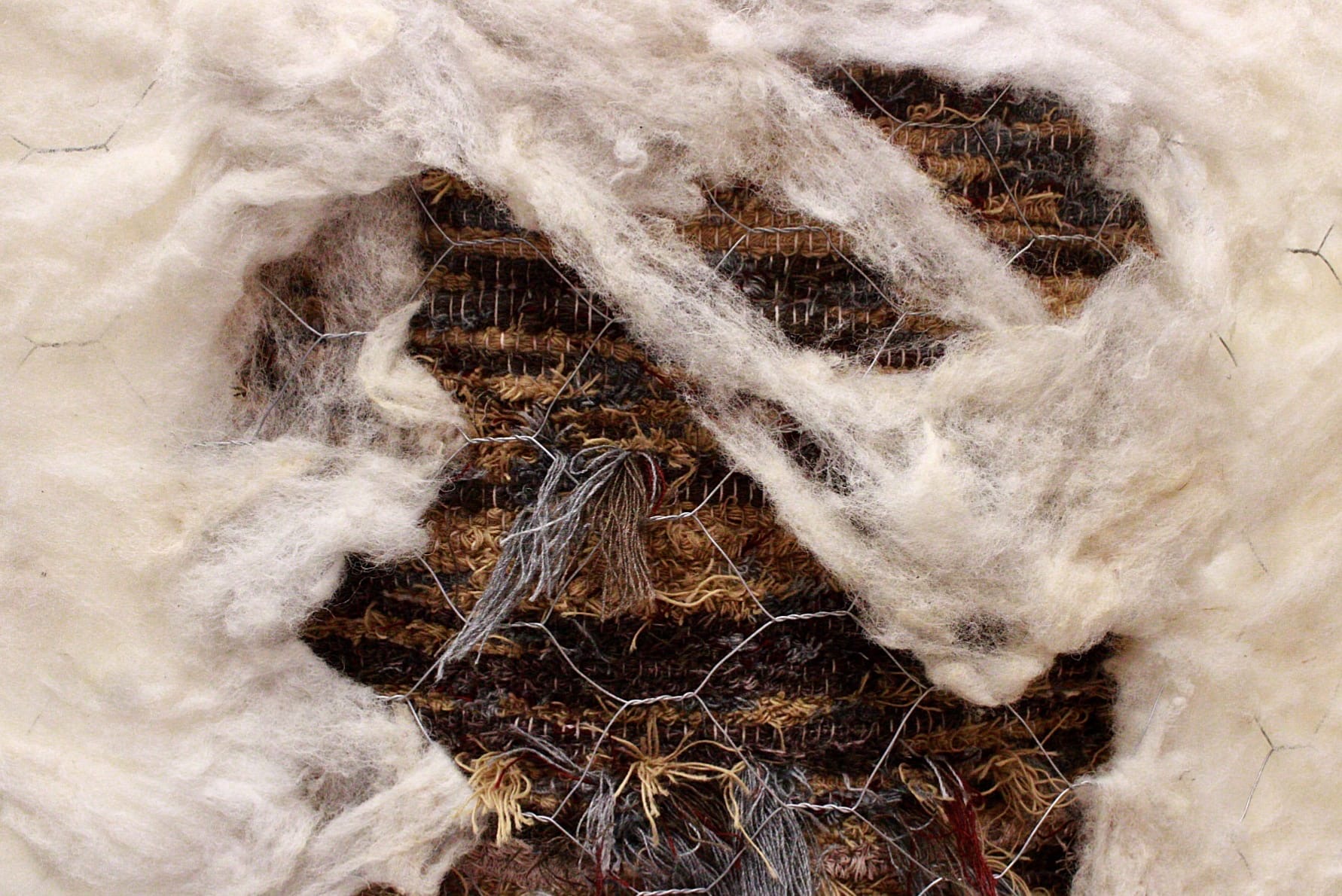
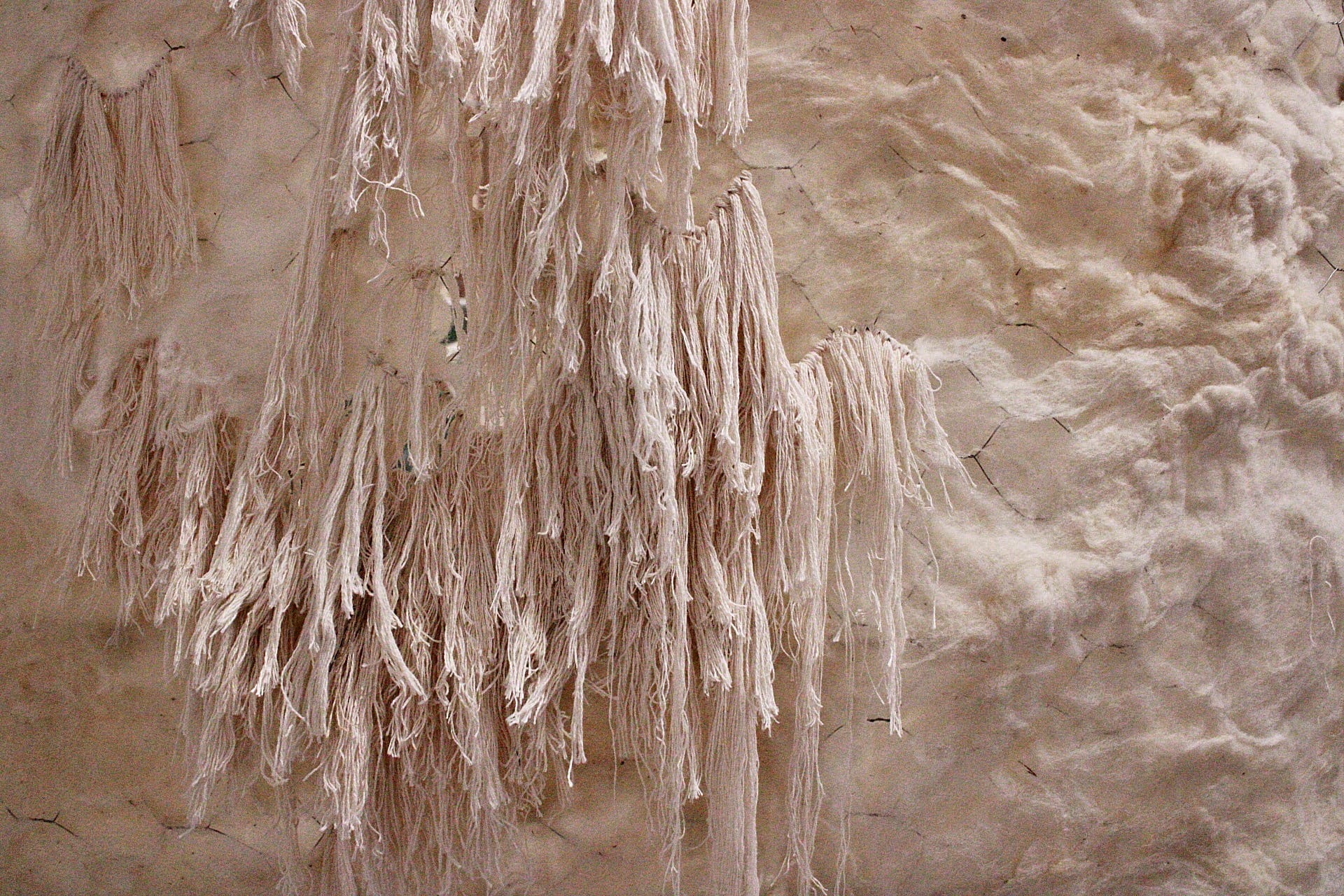
A matéria que predomina – a lã – vem diretamente das ovelhas dos nossos vizinhos, que já não sabem o que fazer com ela. A produção desta matéria está, também ela, por um fio. Qualquer conversa na tentativa de encontrar uma solução, para este estado de calamidade, acabava por nos devolver cansaço, impotência e a confirmação de que chegámos a este estado de fragilidade por abuso de poder, seja ele económico, social, político ou outro. Ainda assim, entre cada fio, cada nó, surgia a possibilidade de reatar ligações, imaginar alternativas e reconstruir aquilo que parece estar constantemente a desfazer-se.
O casulo não é feito por um único fio. É uma trama de muitas pequenas ações, muitas presenças, muitos gestos invisíveis. Quando o poder o destrói, não destrói apenas uma forma; põe em causa o valor do trabalho coletivo que a tornou possível. Ainda assim, procuramos sempre os fios que nos permitem recomeçar.
Queremos abrandar este movimento. Queremos denunciar este abuso. Desacelerem, antes que seja tarde demais.
Cocoon
The theme “By a Thread” proved particularly stimulating. In the end, we found ourselves, quite literally, hanging by a thread and, little by little, in that fragility, we decided to hang everything from a single thread.
As we thought, made and talked, we realised that the thread could not be static. Just as the world turns, spins, trembles and explodes, this “Cocoon”, as we decided to call it, is of that nature: a living system. It carries us, renews us, but it is also on the brink of giving way, of collapsing.
The cocoon is not merely protection; it is a membrane that surrounds the body and transforms it. Like fabrics, clothes and accessories, the cocoon creates a relationship between the inside and the outside, between what we are and what we are becoming.
The predominant material – wool – comes directly from our neighbours’ sheep, and they no longer know what to do with it. The production of this material is also hanging by a thread. Any conversation in an attempt to find a solution to this state of calamity ended up bringing us back exhaustion, powerlessness and the confirmation that we have reached this state of fragility through abuse of power, whether economic, social, political or otherwise. Even so, between each thread and each knot, the possibility emerged of re-establishing connections, imagining alternatives and rebuilding what seems to be constantly coming undone.
The cocoon is not made from a single thread. It is a weave of many small actions, many presences, many invisible gestures. When power destroys it, it does not destroy only a form; it calls into question the value of the collective work that made it possible. Even so, we are always seeking the threads that allow us to begin again.
We want to slow this movement down. We want to denounce this abuse. Slow down, before it is too late.
EAAD/UM
Escola de Arquitetura, Arte e Design da Universidade do Minho
School of Architecture, Arts and Design / Universidade do Minho
Curadoria / Curatorship
Grupo interdisciplinar DiTTA: Discursos sobre Teritório,
Têxteis e Arte (2C2T e Lab2PT)
Alice Prata, Joana Cunha, Miguel Bandeira Duarte, Mónica Faria, Natacha Antão
Agradecimentos / Acknowledgements
Queremos agradecer aos estudantes da Escola Secundária Francisco de Holanda pela participação, pela curiosidade e pela boa disposição com que se disponibilizaram a aprender as “pequenas coisas da vida”:
We would like to thank the students of Escola Secundária Francisco de Holanda for their participation, their curiosity and the good humour with which they made themselves available to learn the “small things in life”
Antónia Domingos, Francisco Salgado, Dinis Silva, José Silva, Lara Fernandes, Lara Oliveira, Miguel Soares, Miguel Lourenço e Rodrigo Oliveira.